

So you’re officially enrolled and eager to get started. But where does one begin?
As part of QSEP, you are required to fulfil certain requirements relating to the different areas of training and key roles.
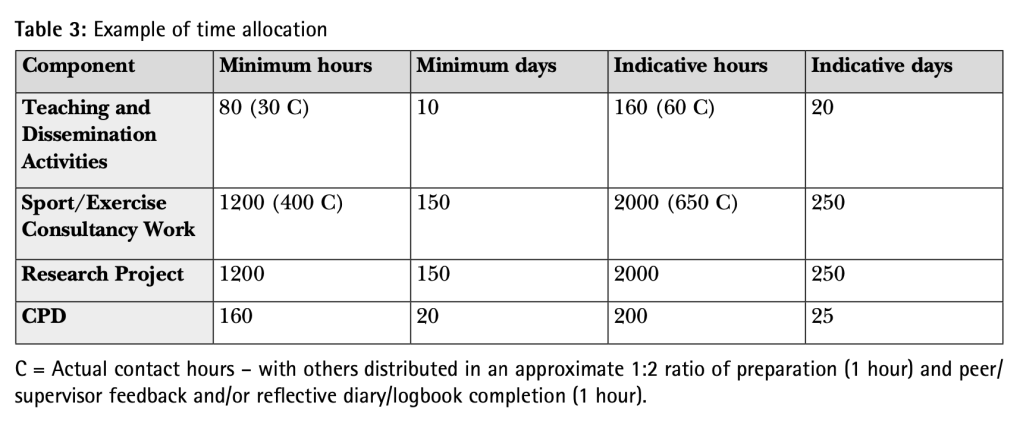
This can be found in the QSEP handbook which you can view here
As you can see each component requires a minimum number of hours of engagement. The BPS have also included an indicative amount of hours and days, which is the number that they recommend.
When I first started the course, I was confused about what actually constituted ‘teaching and dissemination’ or ‘CPD’ as these descriptions are rather broad and vague. Through talking to other candidates and my supervisor, I gained clarity on the sort of activities I can count towards these hours. I encourage you to befriend other candidates on the course, without them I would have absolutely no idea what I am doing!
It’s useful to note that for each activity you can log a couple of more hours than just the time it took to complete the activity. For example, for consultancy work, for every hour of face to face contact you log, you can also log 1 hour of preparation e.g. prepping for the session with research and preparing a session agenda, as well as an hour of reflection. So for a one hour session you could log 3 hours. This is similar for other activities, for example teaching and dissemination it may take you 3 hours to plan and design a workshop and 1 hour of reflection.
The handbook does mention some of the activities that can be counted toward your hours, but it is not an exhaustive list. Let’s go through some of them.
Teaching and dissemination (Key role 4)
This involves communicating psychological knowledge, principles, methods and needs. In simple terms, talking about psychological concepts and educating people. This can be achieved through various avenues.
- Lecturing
- Writing and publishing articles
- Writing and publishing blog posts
- Delivering talks
- Delivering workshops
- Presenting at conferences
- Posting on social media (@beyondbetterclub)
Sport/ Exercise Consultancy Work (Key role 2)
This is the hands on, applied work that you do with clients. The ‘therapy’ or ‘counselling’ part of being a psychologist. I imagine that this is what most people on this course are interested in, myself included. Working closely with clients to understand their needs and support them. To meet these hours, you can work with a range of individuals.
- Athletes at any level
- Student athletes
- Gym goers
- ‘Every day people’ wanting to live a healthier lifestyle
- Coaches
- MDT and other support staff
- Individuals in injury rehabilitation
- Individuals in health recovery
- Supporting dietician referrals
- Supporting GP referrals
Research Project (Key role 3)
Perhaps the most straightforward in terms of understanding what activities are included in these hours. This is your research project, similar to what you would have done during your masters degree, just another level up.
- Literature search
- Reading
- Research supervisor meetings
- Data collection
- Data input
- Data analysis
- Report write up
- Dissemination
Continued Professional Development (CPD, Key role 1)
The clue is in the name of course. This component is there to ensure you engage in activities that contribute to your development as a practitioner in any way possible.
- Understanding and reflecting on ethical issues
- Seeking and implementing feedback
- Creating and maintaining professional relationships with others
- Additional CPD courses e.g. nutrition
- Courses on approaches to psychology e.g. CBT, Psychoanlaysis
- Courses on mental skills e.g. imagery, self-talk, goal setting
- Attending conferences, workshops and talks
As I mentioned, within each component there is undoubtedly some activities I have not listed, not for any other reason than perhaps I haven’t come across them or engaged in them yet, so I am unaware. This is why I strongly suggest talking to other candidates, to previous candidates, to senior psychologists, to the BPS staff, your supervisors and anyone else you can think of. The more information you have, the easier it will be for you to engage in a wider variety of activities. Not only will this make it easier for you to fulfil the hours, but you will expose yourself to a broader range of activities and experiences, ultimately making you a better practitioner.
Go get it!
Written by Natasha Bains
Stay locked in and subscribe to receive notifications when the next post is published
 Beyond Better
Leave a comment